What Is EVSE Understanding Electric Vehicle Charging Equipment and How It Works
Electric Vehicles
|
May 6, 2026
Electric Vehicle Charging Equipment (EVSE) encompasses the hardware used for delivering electrical energy to electric vehicles (EVs) to recharge their batteries. As a foundational part of the electric vehicle infrastructure, EVSE includes a variety of charging stations and connectors designed to streamline the charging process. Unlike the onboard charger inside the vehicle—which is responsible for converting alternating current (AC) sourced from the EVSE into direct current (DC) necessary for battery storage—EVSE primarily supplies the needed power and establishes communication protocols between the vehicle and the charging station. Recognizing these differentiations is essential for maximizing charging efficiency and choosing the best charging options available for EV owners.
1. Understanding Electric Vehicle Supply Equipment (EVSE)
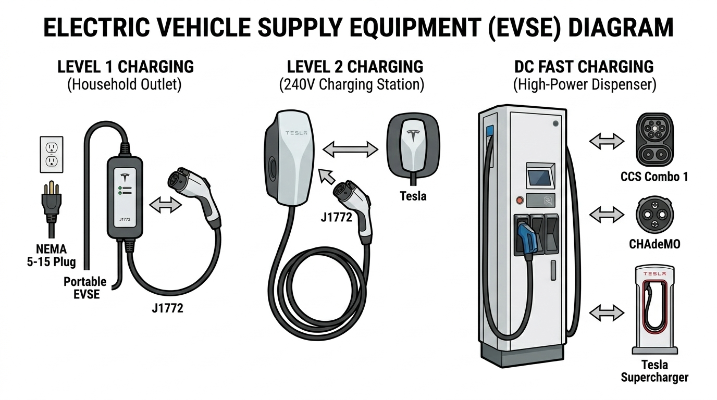
Electric Vehicle Supply Equipment (EVSE) serves a critical role in the electric vehicle (EV) charging ecosystem, acting as the intermediary that connects an EV to its power source. This equipment is necessary for charging at home, workplaces, or public charging facilities and includes essential components such as connectors, circuit breakers, and networking capabilities that enable interaction with smart charging systems. The key difference between external charging equipment, like EVSE, and the onboard charger lies in their respective functionalities. Namely, the EVSE converts AC or DC electricity from the grid into a form suitable for charging the vehicle, while the onboard charger converts this electrical energy into a format that the EV battery can utilize. This symbiotic relationship is central to ensuring safe and efficient charging, with the EVSE managing the flow of electricity tailored to the vehicle's specific requirements. A comprehensive understanding of these components empowers potential EV owners to make informed choices regarding their charging solutions.
2. Comparing Charging Levels
2.1 Level 1 Charging
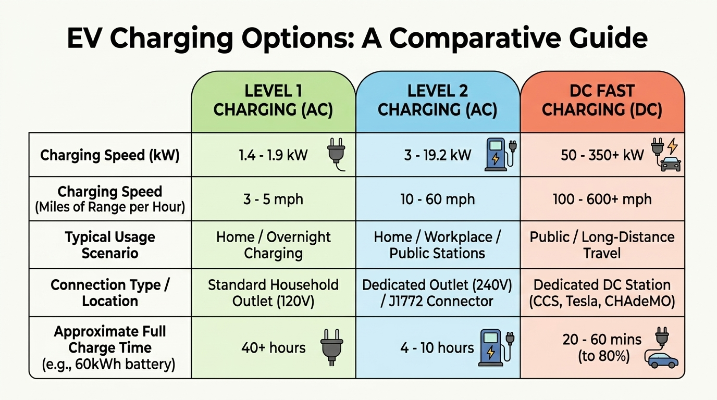
Level 1 charging is widely regarded as the most accessible option available to electric vehicle owners, operating through standard household outlets—generally at a voltage of 120 volts. This simplicity makes Level 1 charging an attractive choice for many users, especially those with shorter daily travel needs. When utilizing Level 1 chargers, the charging speed typically varies, providing a range of about 2 to 5 miles of driving range for every hour charged. This rate generally satisfies the requirements of users with short commutes who can conveniently recharge their vehicles overnight. Installation is straightforward, often necessitating only a dedicated 15- or 20-amp circuit, which many residences already possess.
However, despite these benefits, Level 1 charging comes with notable downsides. The slower charging speed may not be adequate for drivers who frequently travel longer distances or require faster recharges between errands. Moreover, in households with multiple electric vehicles, relying solely on Level 1 charging may extend wait times and complicate scheduling. Regardless, many new electric vehicle owners appreciate Level 1 charging due to its convenience and minimal installation costs, positioning it as a practical entry point into electric vehicle ownership.
2.2 Level 2 Charging
Level 2 charging has gained popularity among electric vehicle (EV) owners, primarily due to its efficiency and ease of access. Operating at 240 volts, it significantly enhances charging speeds when compared to Level 1 alternatives. Users commonly implement Level 2 charging in residential garages, commercial parking lots, or public charging stations. Under optimal conditions, Level 2 chargers can generate power ranging from 3.3 kW to 19.2 kW, interpreting to an approximate increase of 10 to 60 miles of driving range per hour, contingent upon the specific vehicle model and charger configuration.
For installation, Level 2 chargers necessitate a dedicated power circuit, which may entail an upgrade to the electrical panel for home setups. While this upgrade can lead to increased initial costs, having a certified electrician complete the installation optimizes safety compliance with codes and enhances charging efficiency. However, users should be aware of potential limitations, including the necessity of ample garage space and property restrictions from homeowners’ associations regarding visible installations. Ultimately, Level 2 charging provides a balanced solution for individuals seeking a faster and more convenient charging option while avoiding the more significant expenses associated with DC fast charging networks.
2.3 DC Fast Charging
DC Fast Charging (DCFC) is an essential technology for electric vehicles (EVs), enabling notably quicker charging compared to conventional Level 1 or Level 2 options. Operating at voltage levels typically ranging from 400 to 900 volts, DC fast chargers send direct current directly to the EV battery, bypassing the onboard charger. This method results in significantly reduced charging times; most EV models can achieve an additional 60 to 80 miles of range in roughly 20 minutes, rendering DCFC particularly valuable for long-distance travel and quick stopovers.
Nevertheless, installation considerations, as well as limitations, should not be overlooked when evaluating DCFC options. These charging stations typically require extensive electrical infrastructure, often needing a dedicated power supply and higher amperage circuits, which can lead to elevated installation costs. Furthermore, access to DC fast charging stations is frequently limited to more populated urban areas or along major highways, resulting in lower visibility compared to standard chargers. Additionally, rapid charging can negatively impact battery longevity because frequent use of fast charging methods may speed up battery degradation over time. Therefore, while DC Fast Charging offers unparalleled convenience, users must weigh these variables against their driving habits and long-term battery health.
3. EV Charging Connectors and Compatibility: Understanding Different Charging Standards
When it comes to electric vehicles (EVs), understanding various charging standards is crucial to enhance the charging experience. The most prevalent standards in the United States include J1772, CCS, CHAdeMO, and NACS.
J1772 is the standard connector associated with Level 2 charging and is widely utilized across the majority of electric vehicles. The connector supports a maximum charging rate of 19.2 kW, making it perfectly suitable for both home and public charging applications.
CCS (Combined Charging System) integrates the J1772 connector with additional pins specifically designed for DC fast charging, allowing for enhanced power delivery of up to 350 kW. This standard is being adopted by an increasing number of automakers, ensuring superior charging capabilities across their vehicles.
CHAdeMO constitutes another DC fast charging standard, primarily linked to various Japanese manufacturers like Nissan and Mitsubishi. It allows rapid charging at rates up to 62.5 kW, with specific characteristics suited for particular vehicle models.
Lastly, NACS (North American Charging Standard) is emerging as a favored unified connector option primarily proposed by Tesla, aiming for a cohesive charging process across different vehicle types.
Verifying vehicle-specific compatibility with these standards is essential, as utilizing a mismatched charger can result in inefficient charging or even damage to the vehicle. Prospective EV owners must always check their vehicle’s specifications to ensure seamless connections to the appropriate charging infrastructures.
4. Home EV Charger Selection Formula
To effectively select an optimal home EV charger, consider the following formula:
Charger Power (kW) = (Daily Miles Driven / Vehicle Efficiency) / (Available Overnight Charging Hours) + Future Charging Needs Adjustment
1. Daily Miles Driven: Start by assessing your average daily mileage. For example, if your daily driving averages 30 miles and your vehicle provides 4 miles per kWh, the daily energy requirement would translate to around 7.5 kWh.
2. Vehicle Efficiency: This aspect pertains to your vehicle’s efficiency (kWh/mile). Hence, if your car consumes 0.25 kWh per mile, your daily need would be calculated as 30 miles x 0.25 kWh = 7.5 kWh.
3. Available Overnight Charging Hours: Next, determine how many hours you have available to charge overnight. For illustration, if charging occurs from 10 PM to 6 AM, that gives a total of 8 hours.
4. Future Charging Needs: Finally, consider potential increases in future charging requirements, such as accommodating additional EVs or longer travel distances. Adding a safety margin of 10-20% to your calculation can enhance preparedness for these future demands.
Thus, for the example discussed above, the needed charging capacity would be as follows:
(7.5 kWh / 8 hours) + 1 kWh (for future needs) = 1.67 kW of charging capacity required to sufficiently meet both current and upcoming demands.
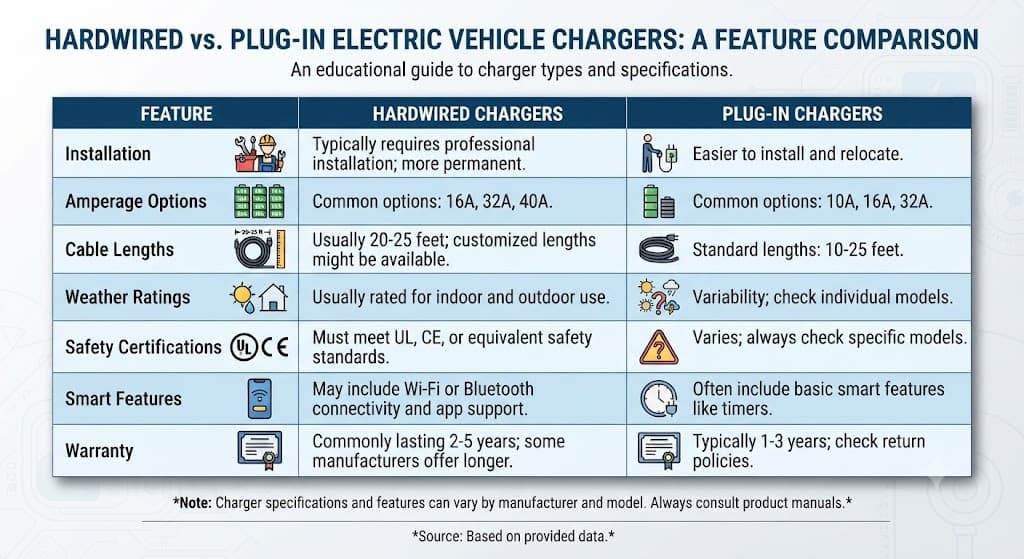
5. EV Charger Feature Comparison
6. Installation Considerations
Engaging a qualified electrician for the installation of an electric vehicle (EV) charger is paramount for ensuring both safety and adherence to local regulations. A professional ensures that installations comply with the National Electrical Code (NEC) as well as local codes governing the electrical work, which can dictate a range of requirements, from specific materials used to installation methods based on the region.
In following these codes, electricians can guide through the necessary permitting processes that may precede the installation. This guarantees that the project receives proper inspection and approval from local authorities, emphasizing safety. Furthermore, qualified electricians possess the expertise required to navigate safety protocols, such as circuit protection and grounding requirements, ensuring a reliable and properly functioning installation. Neglecting these critical installation factors could lead to severe hazards, such as electrical fires or malfunctioning chargers.
7. Costs, Utility Rates, and Incentives
When evaluating the installation of electric vehicle supply equipment (EVSE) within multifamily housing, multiple financial elements merit consideration. Primarily, installation expenses may vary significantly, depending on the infrastructure requirements of the building, extant electrical capabilities, and the necessity of upgrades. Utility rates can considerably impact overall costs, as they can fluctuate based on demand response programs, time-of-use pricing, and regional electricity pricing structures that often include elevated peak-hour costs.
Building owners and tenants should also explore potential rebates and incentives provided by local governments or utility companies, designed to reduce installation costs. These financial aids can play a crucial role in enhancing the accessibility of EVSE. However, it is important to remain aware of eligibility limitations, as policies are subject to change over time, which can alter the availability of these benefits. Additionally, as technology and market conditions continue to evolve, expenses related to installation and utility rates may unexpectedly shift. Hence, thorough research and a proactive approach to updates in costs and policies are essential for making informed investment decisions regarding EV infrastructure in multifamily residential environments.
8. Buyer Checklist and Common Mistakes
- Assess Your Charging Needs: Evaluate the type of EV in question alongside typical usage patterns to choose an appropriate charging level.
- Evaluate Electrical Infrastructure: Confirm that your property can sustain the additional load; consult with an electrician regarding potential upgrades.
- Confirm Compatibility with EV Models: Ensure that the charger aligns with your vehicle’s connectors appropriately.
- Explore Charger Features: Seek chargers with smart functionalities like scheduling and remote monitoring features.
- Choose an Appropriate Installation Location: Opt for a site that minimizes installation costs while remaining convenient.
Common Mistakes to Avoid:
- Underestimating Installation Costs: Be vigilant about total expenses, including requisite electrical upgrades and professional installation charges.
- Neglecting Future Charging Needs: Anticipate future requirements to ensure the purchase accommodates potential additional vehicles or heightened charging needs.
- Overlooking Available Incentives and Rebates: Research local or federal incentive programs that may assist in offsetting costs.
- Taking On DIY Installation Risks: Avoid DIY installation unless certified; improper setups can escalate safety hazards.
Related Posts
Chinese Electric Vehicles How China Is Reshaping the Global EV Market

Slate Electric Vehicle Explained Features, Technology, and the Future of Affordable EVs
Toyota Corolla 2026 Review Is It Actually Worth Buying for Budget Buyers?
Luxury Looks, Affordable Price The Best New Cars You'll Love Driving in 2026
Honda CR-V 2026 vs Toyota RAV4 2026 Which Is More Reliable and Cheaper to Own